
I added a Telegram bridge to my Web Claude Code Pilot project today. You can now send messages from Telegram, and Claude code picks them up, processes them, replies — the full loop. Session management, chat binding, permission approval through inline buttons, all of it.
After I got everything working, I sat back and thought — wait, I just built OpenClaw.
Well, my knockoff version of it anyway. 247K stars, creator got hired by OpenAI, and here I am reinventing the same wheel in my living room. With an audience of one.
Funny enough, that wasn't the part that bothered me. What bothered me was how easy it was.
Working in a Black Box
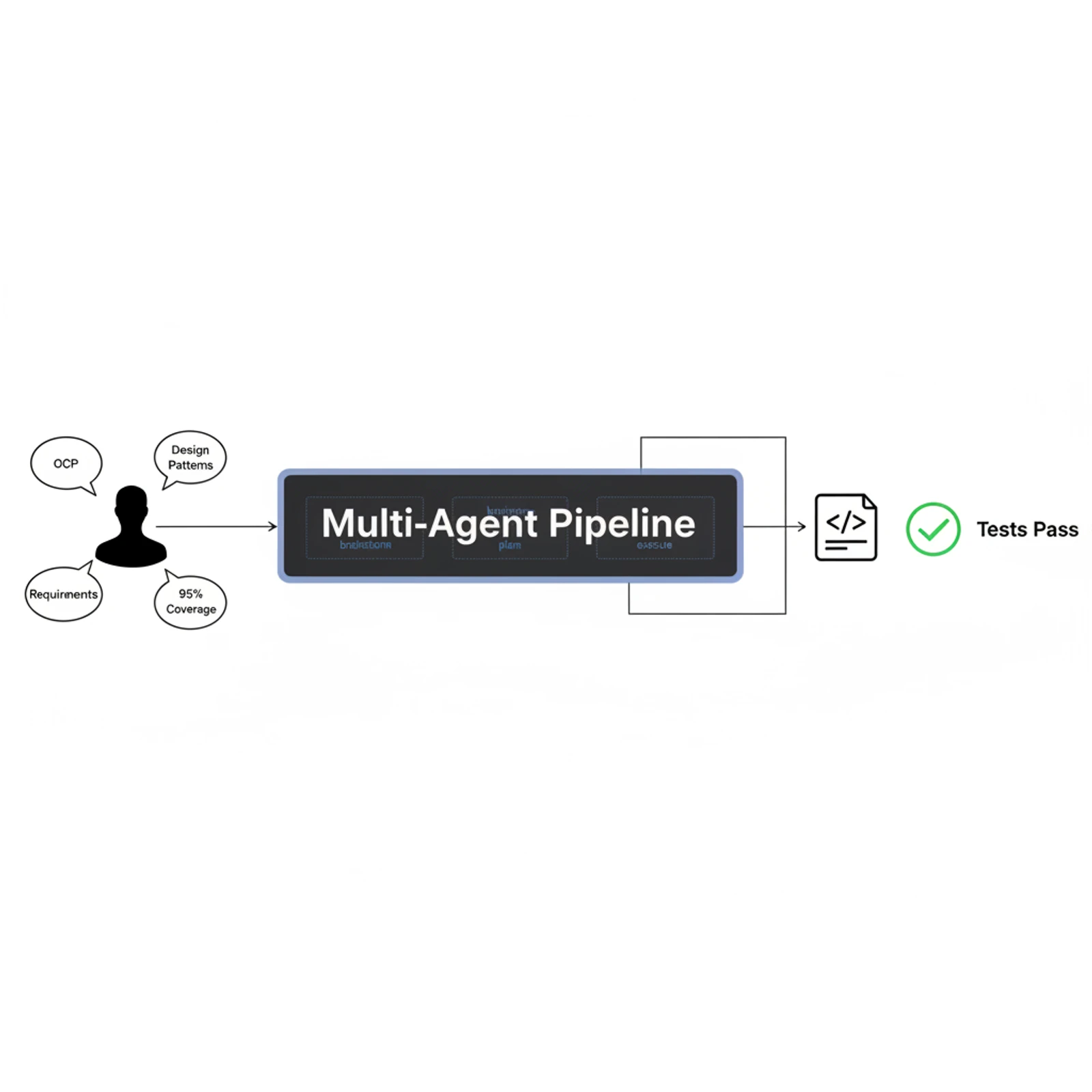
Opus 4.6 with the multi-agent setup has gotten scary capable. I used the Superpower workflow — brainstorm agent to explore the design space, planning agent to write the implementation plan, then sub-agents executing each module. Channel adapter, conversation engine, delivery layer, markdown renderer, permission broker. All built out by agents.
I'm not really a frontend person. I don't deeply understand Next.js internals or React's rendering lifecycle. But I know enough about software design to set constraints. I told the agents to follow the Open/Closed Principle for the adapter system — adding a new IM platform should mean writing one new class, not touching existing code. I specified design patterns where they mattered. I required all tests to pass with 95% coverage on both statements and branches.
Then I let it run, reviewed the output, and did the final integration testing.
That's it. Requirements in, working software out. I was essentially doing black-box testing on my own project.
Why OpenClaw Isn't Popular Because of Its Code
Here's what I kept thinking about afterward. OpenClaw went viral. My project didn't and won't. The technical difference between them is negligible — anyone with access to a capable model and clear enough requirements can build a messaging bridge to an AI agent now.
So why did OpenClaw take off? I honestly don't know exactly. But I'm fairly sure it wasn't the technology. Everyone can build this.
Being able to build it well is one thing. But what actually seems to matter is something else entirely.
First, there's creativity — the original idea, the vision of what the product should be, the timing of when you ship it. Peter Steinberger saw early that people wanted to talk to AI from their existing messaging apps rather than opening a separate tool. That's not a technical insight. It's a product insight.
Second, there's community. Getting discovered. Having people use your thing, contribute to it, tell others about it. OpenClaw has 50+ integrations and 100+ preconfigured skills not because one person built them all, but because a community rallied around the project. That kind of momentum is something you can't engineer with good architecture.
What This Means Going Forward
For me personally, building things is a hobby. I don't expect anything I make to get noticed, and I'm okay with that. Interest comes first.
But this experience left me with a clear sense of where things are going. When the implementation barrier drops this low — when someone who isn't even a frontend developer can ship a working, reasonably well-architected feature by just specifying principles and constraints — then the bottleneck shifts entirely.
In enterprise and team settings, technical depth still matters. Architecture decisions at scale have long-term consequences. Someone needs to understand distributed systems, data pipelines, failure modes. That's not going away.
But for individuals? If you want to quickly build a demo, a prototype, something usable with decent quality — you can. Right now. The tooling is there.
Which means the things that differentiate you are no longer technical. They're about your ideas — how clear your thinking is, how well you understand a problem domain, how precisely you can reason about what needs to exist and why. If you know an industry deeply, if you're an expert in some vertical, there are real opportunities. The person who understands the problem wins, because the building part is increasingly handled.
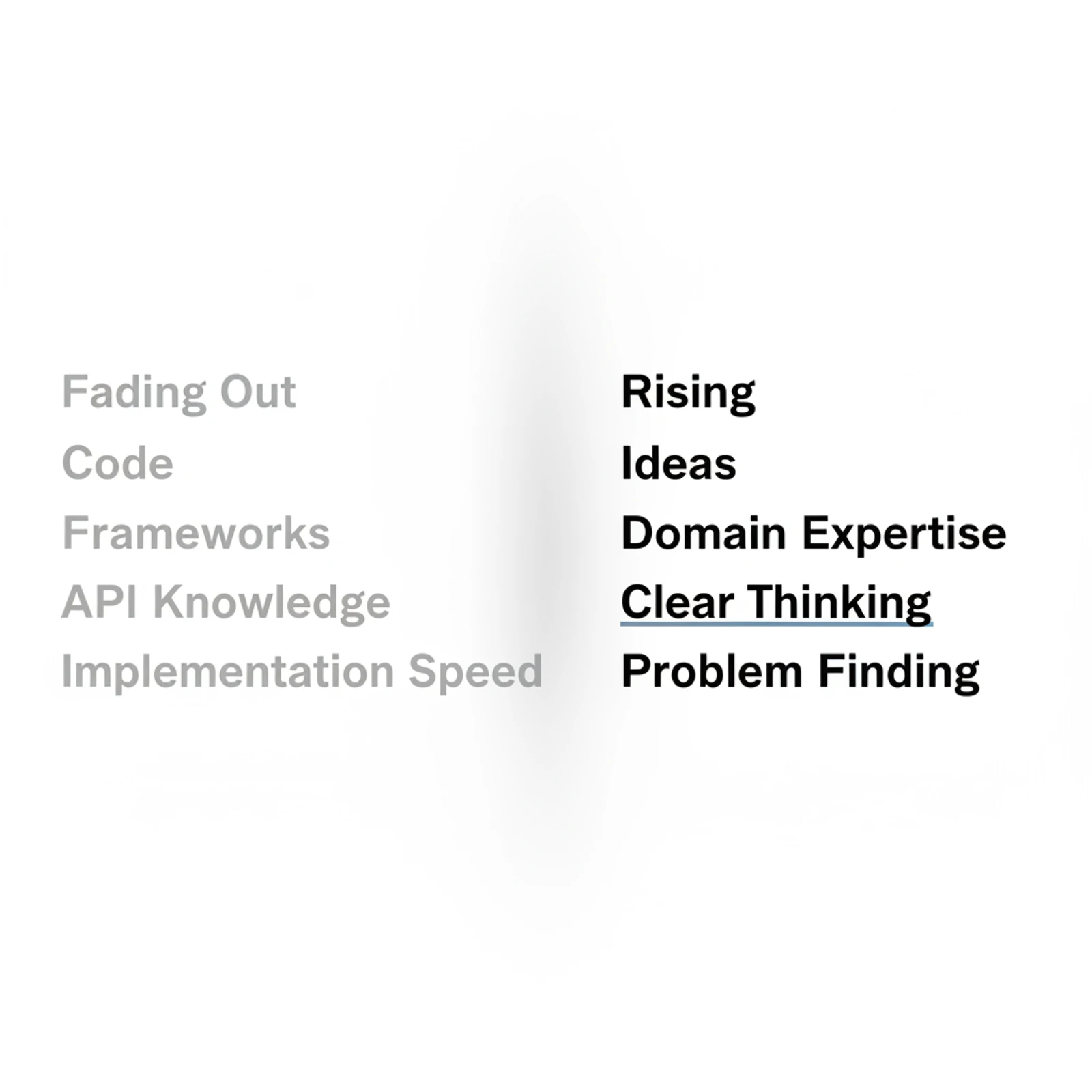
I spent today building something that already exists and that anyone could replicate. The code is solid. The tests pass. And it doesn't matter.
What would matter is having the idea no one else has had yet. I'm still working on that part.